Denshin vs Tailscale
Denshin and Tailscale solve different layers.
Tailscale connects devices into a private network. Denshin turns one machine into a mobile terminal and coding-agent control surface.
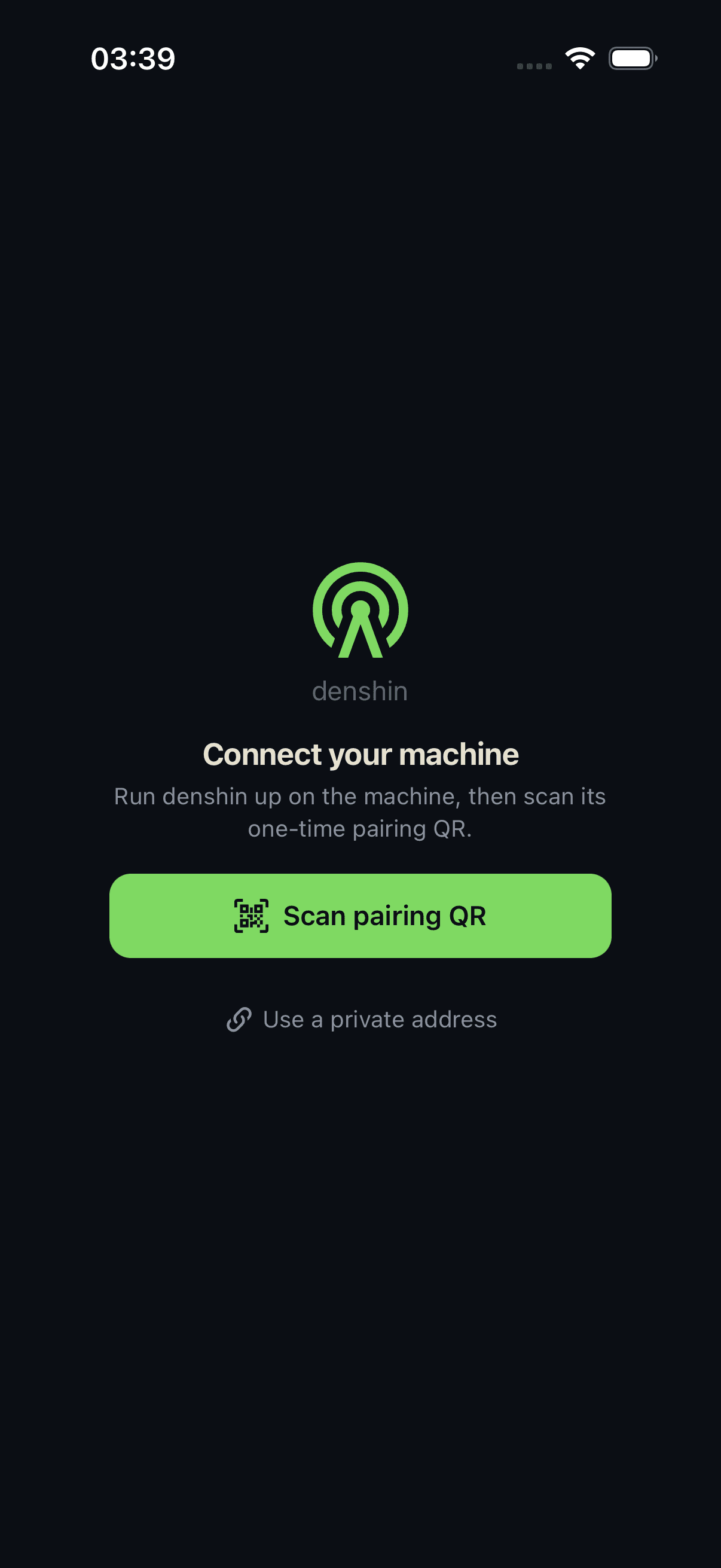
Use Tailscale when the job is to reach many private services. Use Denshin when the job is to supervise the terminal and agents on one of your machines from a phone.
Research reviewed 16 July 2026Compare the job, not the category.
These products can overlap in a workflow without solving the same problem.
DimensionTailscaleDenshin
Primary job
Private device-to-device networking
Remote terminal and coding-agent supervision
What runs on the phone
A network client; another app or service handles the terminal
The terminal, session list, agent view and decisions
Target service
Any service allowed by the tailnet policy
The Denshin daemon and its bounded product API
Session durability
Left to SSH, tmux or the target service
Owned by Denshin and tmux with snapshot and catch-up
Agent semantics
None at the network layer
Provider-aware Work, Run, Decision and raw PTY views
Best fit
A private network across devices and services
A focused mobile control surface for development work
You want pairing, durable PTY sessions, mobile terminal controls, agent projections and decisions in one product flow.
Primary sources, not feature folklore.
Capabilities and limits change. These links are the official references used for this comparison.