Denshin vs Mosh
Denshin is a control plane. Mosh is a resilient shell protocol.
Mosh makes one interactive shell responsive across roaming and intermittent networks. Denshin adds mobile product state, durable sessions and coding-agent context around the terminal.
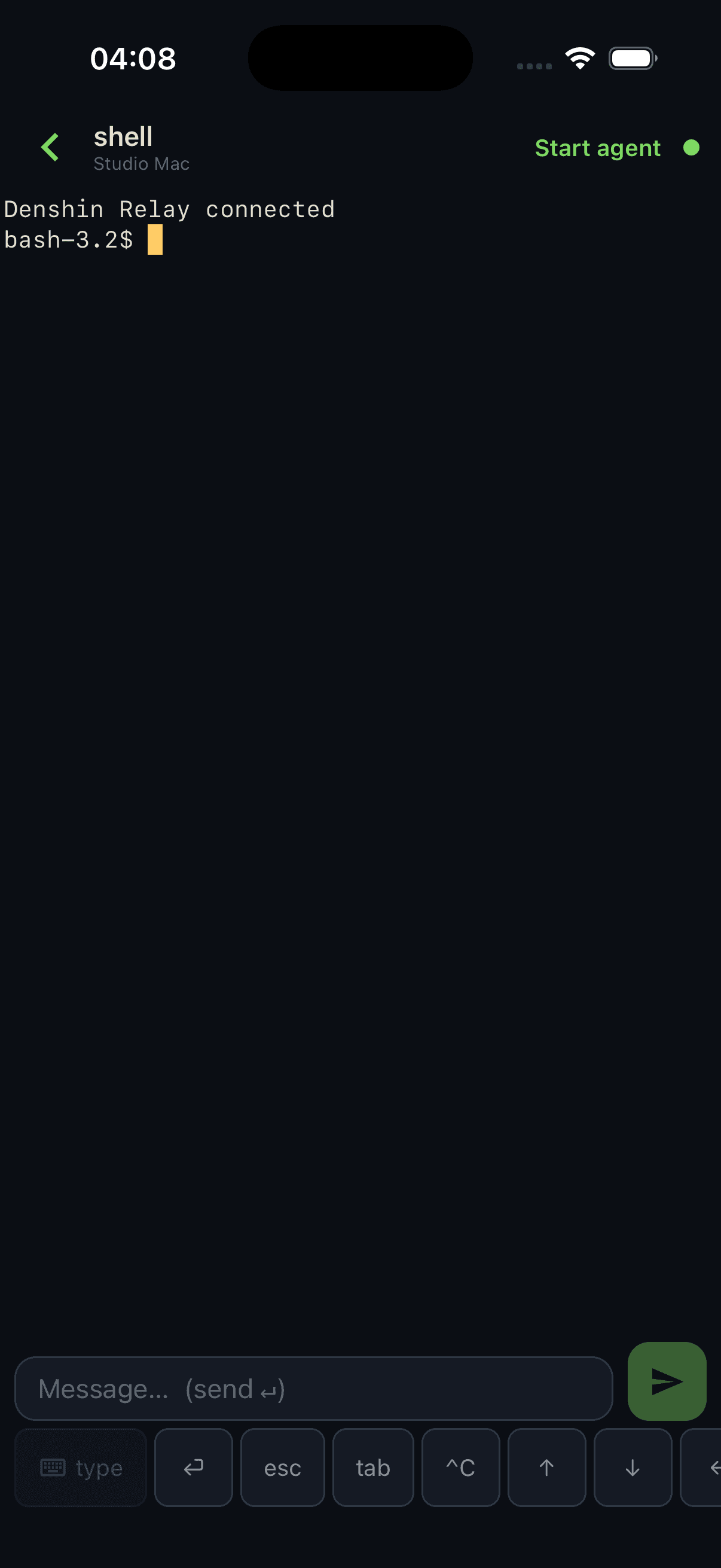
Choose Mosh for a fast, roaming command-line shell you are happy to assemble yourself. Choose Denshin for the whole phone-to-machine workflow and structured agent supervision.
Research reviewed 16 July 2026Compare the job, not the category.
These products can overlap in a workflow without solving the same problem.
DimensionMoshDenshin
Primary job
Synchronize an interactive remote shell over UDP
Supervise terminal sessions and coding agents from mobile
Bootstrap
Uses SSH to start the remote mosh-server
Pairs a device with a Denshin machine through a short-lived QR
Durable process
Use tmux or another session manager separately
Durable tmux-backed tabs are part of the product model
Mobile UI
Provided by the client implementation
Purpose-built session, terminal, agent and decision surfaces
Agent semantics
The shell carries the CLI output
Structured provider events where available, plus the same raw PTY
Network behavior
Roaming and intermittent connectivity are core protocol goals
Versioned resume, outbox and transport-independent connection recovery
You want one app to pair, discover durable sessions, receive decisions, inspect agent work and take over the raw PTY.
Primary sources, not feature folklore.
Capabilities and limits change. These links are the official references used for this comparison.